Dec 4, 2025
How a smart coffee shop layout can boost sales and streamline your workflows
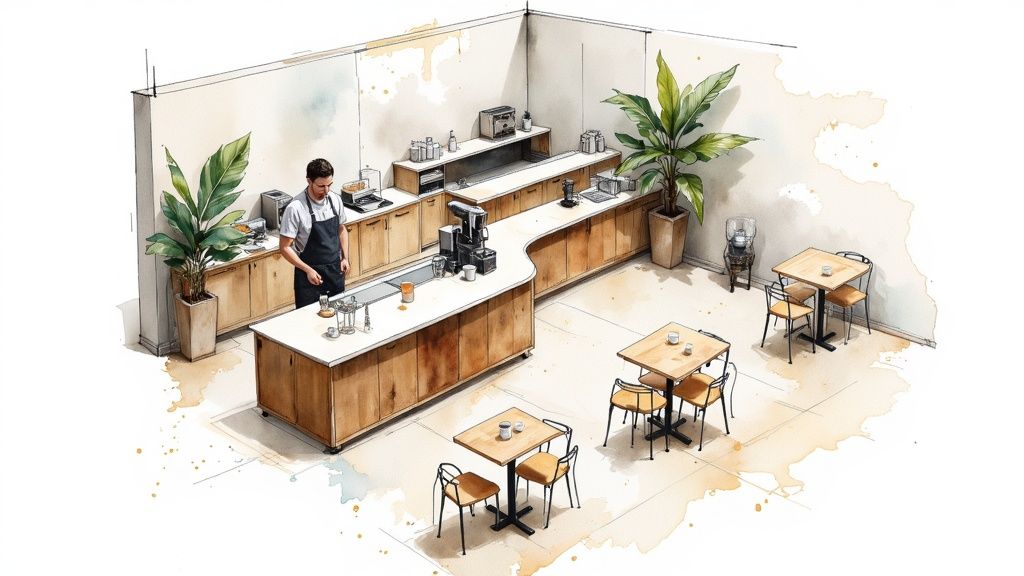
A well-designed coffee shop layout is your hardest-working employee. A great one guides customers effortlessly, helps baristas work faster, and sells more pastries without saying a word. A bad one creates chaos during the morning rush, burns out your staff, and leaves money on the table.
Your coffee shop layout isn't just about aesthetics; it's a tool that directly impacts your bottom line. A poorly planned space creates friction—baristas bumping into each other and customers crowding the wrong areas. A strategic layout, however, turns your space into a profit-generating machine.
Thinking of your shop's layout as the strategic floor plan of a commercial building is the first step. It’s about engineering an environment that supports your business goals.
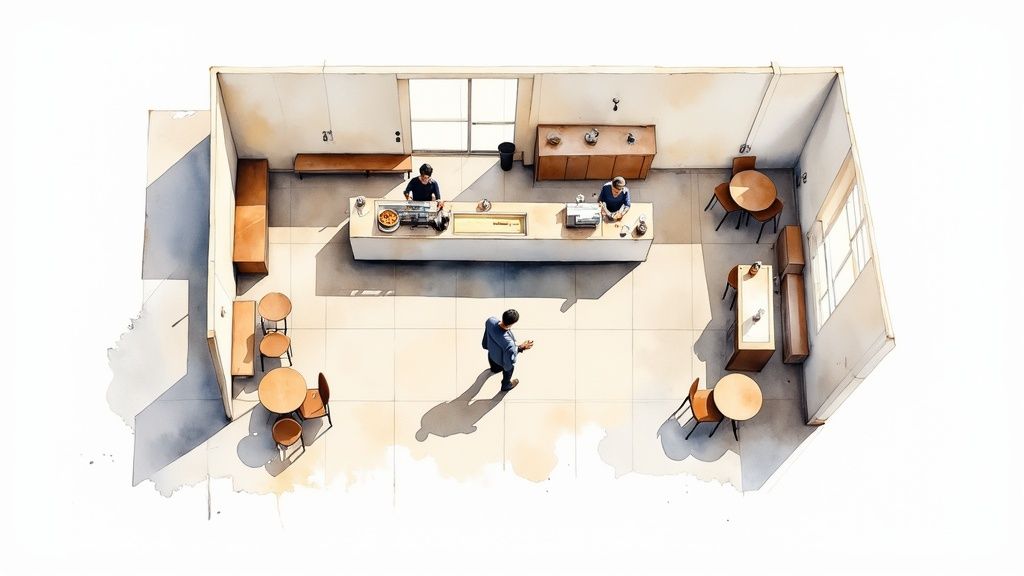
A thoughtful design directly influences three critical aspects of your business:
The difference between a layout that costs you money and one that makes you money is in the planning. A chaotic floor plan can easily add 30-60 seconds per order, which adds up to hundreds of dollars in lost sales during a single busy morning.
I’ve seen new shop owners buy a beautiful espresso machine before they even know where the plumbing is. Before you spend a dollar on equipment, grab a tape measure and get to know your space.
Start by mapping the "non-negotiables"—doorways, windows, columns, and your existing plumbing and electrical mains. These are the fixed anchors your entire layout will be built around. Knowing these constraints upfront saves you from realizing your dream bar location is 30 feet from the nearest water line.
Once you have your fixed points mapped, think in zones. Every coffee shop needs these distinct areas to keep things moving smoothly:
Thinking through your zones is a core part of your business strategy. To see how this fits into the bigger picture, check out our guide on how to create a coffee shop business plan.
With your zones sketched out, take a mental walkthrough. Pretend you're a customer, then a barista. This is your chance to spot problems on paper, which is cheaper than fixing them in the real world.
A common bottleneck is the restroom line interfering with the mobile order pickup area. During a rush, this creates a frustrating cluster. Identifying this on paper allows you to rethink the flow before it becomes a daily headache.
Look for other friction points. Will the line block the pastry case? Does staff have to weave through customers to get ice? Is there enough room behind the counter for two baristas? Thinking through these scenarios now will save you countless frustrations.
An inefficient bar is where profit goes to die. During a rush, every wasted second and extra step impacts your ticket times and bottom line. A logical workflow lets your team serve more people with less stress.
The heart of an efficient coffee shop is the barista triangle. This concept minimizes movement by keeping the three most-used stations within a step of each other: the espresso machine, the grinder, and the milk fridge. If these stations are spread apart, your barista wastes time walking back and forth for every milk-based drink. When you’re making hundreds a day, those saved steps add up to faster service.
Beyond the core triangle, arrange your bar in a logical, assembly-line order:
Your bar layout should read like a sentence. An order is placed, the cup moves down the line, and it ends at a clear pickup point. Any break in this flow creates a bottleneck.
One of the biggest workflow killers is the chaos of mobile and delivery orders. When drivers and app users crowd your counter, it intimidates regular customers and slows down your operation.
The solution is a dedicated pickup zone, physically separate from your main queue. It needs to be visible, clearly signed, and located on a path that doesn't interfere with in-store customers. This one adjustment can dramatically reduce counter congestion. For more ideas, see our guide on how to improve restaurant operations for greater efficiency.
Your seating is a silent salesperson, guiding how customers experience your shop and how much they spend. The right layout creates distinct zones that serve different needs and drive revenue.
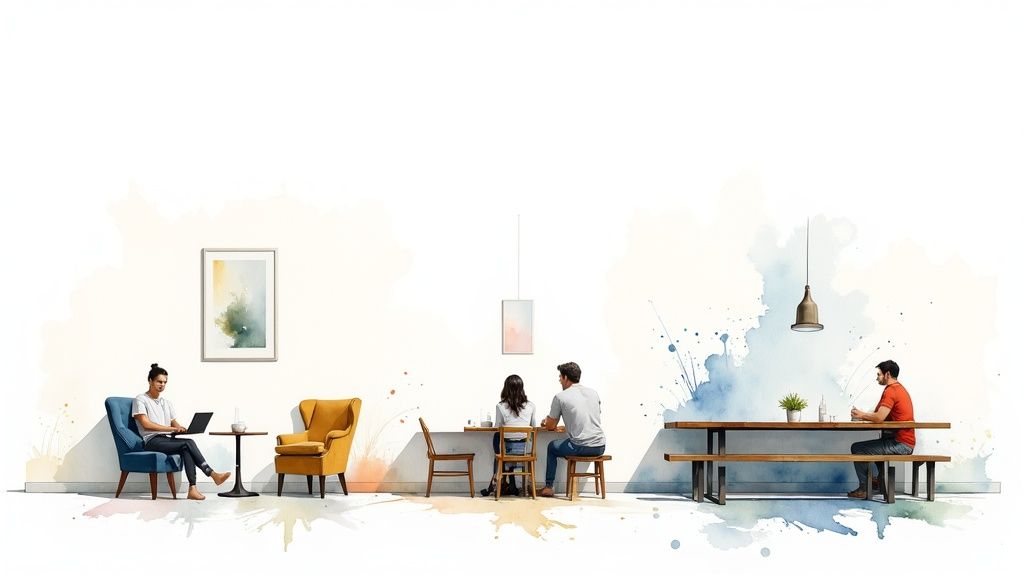
Your layout should serve different types of guests. This is where zoning comes in.
Here’s a practical breakdown for a typical mid-sized shop:
Seating TypeTarget CustomerNumber of SeatsKey PlacementTwo-Top TablesSolo guests, couples12Near the front, windowsBar SeatingQuick stop, solo6Along a wall or windowCommunal TableGroups, freelancers8Central, well-lit areaLounge Chairs/SofaRelaxing, meetings4Quiet corner, away from doorFour-Top TablesSmall groups, families8Back of the shop, flexible
This balanced approach helps you serve the morning rush, the afternoon study crowd, and weekend social groups in one space. For more on this, check out these essential furniture arrangement tips.
Finally, you must follow the rules. The two big areas are ADA compliance and local fire codes. You need clear pathways wide enough for wheelchair access—typically at least 36 inches wide. This applies to routes to the counter, seating, and restrooms. Always check your city and state regulations. Smart planning integrates these legal requirements into your design from day one, ensuring your layout is safe, accessible, and profitable.
Modern coffee shops run on technology, but you don't want a beautiful space cluttered with cables. The goal is to make your tech feel seamless, supporting your team without getting in the customer's way.
Your Point-of-Sale (POS) system is the command center. Its placement is critical. The best spot is at the end of the counter where the queue forms. This keeps the line moving and stops customers from doubling back.
As mentioned, a dedicated pickup area for mobile and delivery orders is a necessity. Without one, you'll have a crowd of app users and drivers clogging your main counter, intimidating walk-in customers and creating chaos for staff.
Designate a specific, marked zone away from the main ordering line. It could be a small counter or a shelving unit near the door. This simple change to your coffee shop layout keeps your primary workflow clean and ensures every customer has a quick, frustration-free experience.
Power outlets are a utility customers expect. Failing to provide enough charging spots is a fast way to lose the "work-from-cafe" crowd. Place outlets along walls, near communal tables, and consider floor outlets in open areas.
Mount digital menu boards high on the wall behind the counter where they're easily visible. This gives customers time to decide before they get to the POS, shaving seconds off each transaction.
Self-service tech can be a game-changer for your workflow. A well-placed kiosk can free up your baristas to focus on drink quality and customer interaction instead of just taking orders.
If you're considering this, explore the benefits of a self-ordering kiosk for restaurants and see how one could fit into your floor plan. Technology should always serve your operation, not complicate it.
Let's tackle some nitty-gritty details owners wrestle with during the design phase.
The bare minimum clear walkway behind the counter is 36 inches. But that’s tight. For a workspace that’s efficient, you want 42 to 48 inches. This is the sweet spot where two people can pass each other without a clumsy shuffle. It prevents bottlenecks when one barista is pulling shots and another needs to grab milk.
Your counter serves two groups: staff and customers. For the customer-facing side, the standard is 42 inches high. It's a comfortable height for guests and creates a natural separation from the work area.
The working side of the bar should be lower, around an ergonomic standard of 34 to 36 inches. This height reduces strain on your team's wrists, shoulders, and backs, preventing burnout and repetitive stress injuries.
Yes. Absolutely. This isn't a suggestion—it's a health code requirement. You cannot use your three-compartment sink or a dump sink for hand washing. Your bar must have a dedicated hand-washing sink, stocked with soap and paper towels. It needs to be easily accessible for all staff without forcing them to cross major traffic paths.
Planning the perfect coffee shop layout is about balancing efficiency, customer comfort, and hundreds of small details. Just as a great layout streamlines your physical operations, the right POS system can streamline your entire business. Peppr offers a modern, intuitive POS designed by restaurant people. With features like handheld ordering and integrated online systems, we help you serve more guests, faster.
See how Peppr can support your restaurant and get a free demo.

.avif)