Dec 1, 2025
Raise restaurant sales with menu optimizations, staff training, and promotions

The real secret to raising sales in your restaurant isn't a massive, expensive overhaul. It’s about smart, strategic moves that target your menu, empower your team, and sharpen your daily operations.
When you're buried in the day-to-day, thinking strategically feels like a luxury. Between managing inventory, staff schedules, and the line, growing sales often gets pushed aside.
Boosting revenue doesn't have to mean adding more to your plate. It’s about working smarter. Small, focused changes in key areas create a ripple effect on your numbers. We’re talking about practical steps you can start this week, not theory that falls apart during a dinner rush.
Let's cut through the noise. To see real sales growth, you need to attack the problem from multiple angles. Integrating effective local business marketing strategies is a critical piece that gets customers in the door.
Here’s where we’ll focus:
This guide is a practical checklist. Every piece of advice is designed for an independent restaurant where budgets are tight and time is precious.
Your menu isn't just a list—it's your most powerful sales tool. A strategic menu guides guests toward choices that delight them and boost your bottom line. This is a fundamental step in learning how to raise sales in restaurant operations.
Too many operators treat their menu as a static document, only changing prices when a supplier invoice forces their hand. This is a missed opportunity. Your menu should be a living tool, refined based on sales data. The goal is to turn it into a silent salesperson that subtly highlights profitable dishes and encourages a higher spend.
First, you need to know what's selling and what's making money. Dig into your data and categorize every item by its popularity and profitability.
Your items will fall into four buckets:
Don't let emotion run your menu. Your POS data is your best friend here. An item you love might be a "Dog" that's bleeding you dry.
Once you know your categories, use simple design psychology to draw guests' eyes where you want them. Customers' eyes typically land on the top-right corner of a menu first—that's prime real estate for a "Star."
Use subtle visual cues to highlight money-makers. A simple box or bold text can make an item stand out. Write descriptions that sell. Instead of "Chicken Breast," try "Pan-Seared Chicken Breast with Lemon-Herb Butter Sauce." Paint a picture.
You can't engineer for profit without knowing your numbers. Accurately costing every recipe is non-negotiable. That means knowing the exact cost of every ingredient. To get a handle on this, check our guide to mastering restaurant food cost to boost profits.
With accurate costs, you can price for value and profit. Aligning your menu with current trends can lift sales. For example, industry forecasts show categories like chicken and Mexican cuisine are projected to grow. Introducing well-priced, quality items in these categories can drive sales. You can find more insights on how menu trends impact sales projections at NRN.com.
Your menu can be perfect, but it's your FOH team that brings it to life. Every guest interaction is a chance to guide their experience and naturally increase the check size. This is a huge part of how to raise sales in restaurant operations. It starts with shifting the team's mindset from taking orders to shaping the meal.
Your servers are the face of your business. Arm them with knowledge and motivation, and they become a sales force that improves the guest experience.
You can't sell what you don't know. Before a server can recommend your high-margin steak special, they need to describe it with passion. That means they need to have tasted it.
Hold regular pre-shift tastings. When your team can speak from personal experience, their recommendations carry weight. They go from saying, "The salmon is popular," to "You have to try the salmon; our chef gets it in fresh this morning and the crispy skin with that dill sauce is incredible." Which one sells more fish?
Give your team specific talking points for your menu's "Puzzles" and "Stars":
It all starts with analyzing sales data. That’s how you identify which items your team should be passionately selling.
Effective upselling isn't pushy; it's about making thoughtful suggestions. Make specific, enticing recommendations instead of asking generic questions.
Instead of This (Easy "No")Try This (Specific & Enticing)"Anything to drink besides water?""Would you like to start with our signature spicy margarita or a glass of the Kendall-Jackson Chardonnay?""Want any appetizers?""The kitchen just pulled a fresh batch of our crispy calamari. It's perfect for sharing.""Did you save room for dessert?""I highly recommend the chocolate lava cake. We make it to order, so it comes out warm."
This technique plants a specific, appealing idea in the guest's mind. You're helping them choose between two great options. When done right, suggestive selling feels like expert hospitality, not a sales pitch.
A little friendly competition gets people moving. Tying incentives to sales goals gives your team a clear target.
Try simple, short-term contests:
Track progress on a whiteboard in the back office. Making it public keeps the energy high and gamifies the sales process.
The right technology is a critical tool for growth. Focus on practical, ROI-driven tools that solve real problems and contribute to your bottom line. Smart tech gives you back your most valuable asset: time. It automates tasks, provides crucial data, and smooths out friction points.
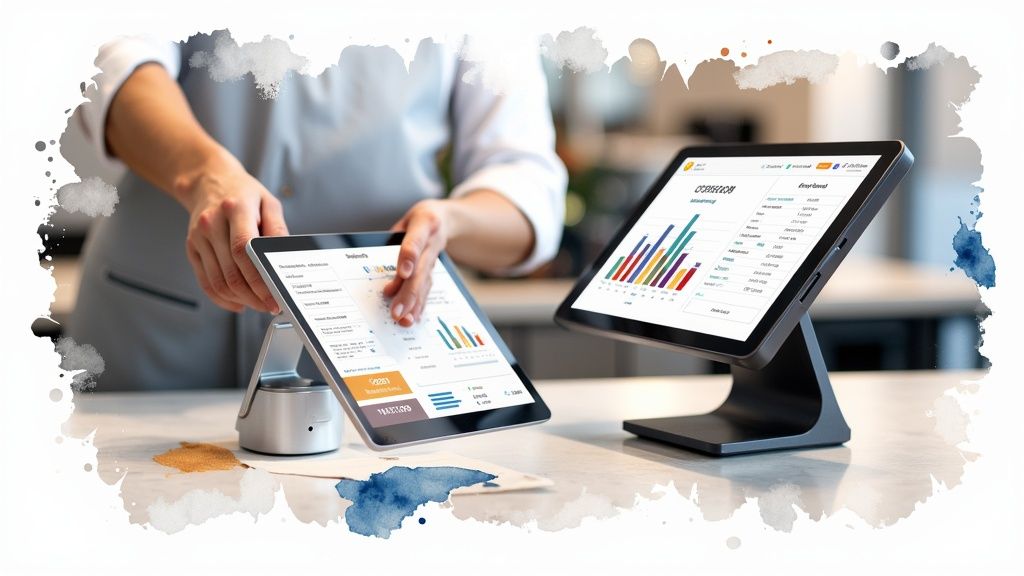
Your POS should be the central nervous system of your operation. A modern system captures a goldmine of data you can use to make smarter business decisions. It tells you what’s selling, tracks inventory, and identifies your most effective servers.
Your POS data is the answer key to how to raise sales in restaurant operations. It removes the guesswork. You can pinpoint underperforming dishes, see which upselling tactics work, and make adjustments based on hard numbers, not gut feelings.
If you're not offering online ordering, you're leaving money on the table. Today’s customers expect that convenience. A commission-free online ordering system on your website opens a massive revenue stream.
Similarly, an online reservation system streamlines your front-of-house. It reduces time on the phone, minimizes no-shows with automated reminders, and gives you a predictable look at your nightly covers. This efficiency means your team can focus on guests already in the building. To ensure customers can find you, implement effective restaurant SEO strategies.
Bringing in a new customer is expensive. Getting a regular to come back is pure profit. Technology makes managing a loyalty program simple. An integrated system can automatically track guest visits and spending, rewarding regulars without punch cards.
Data shows 70% of operators with loyalty programs report increased customer traffic. These tools directly translate into more visits and higher revenue. A good program allows you to collect guest info like emails so you can send special offers for birthdays or new menu previews. These personalized touches build a real connection.
Constant discounts are a race to the bottom. It can cheapen your brand and train customers to only show up for a deal. To raise sales in your restaurant, stop thinking about discounts and start creating strategic offers that drive traffic and protect your margins.
A smart promotion is built on understanding your food costs and what your guests value. Get this right, and you can pack the house on a slow Tuesday without giving away the farm.
The best promotions feel like a special event, not a desperate cry for business. Ditch the generic "20% off" in favor of offers that bundle items or create a unique reason to visit.
Your goal is to increase the perceived value of the experience, not just lower the price.
A poorly planned happy hour is a money pit. A smart happy hour can be a powerful tool for bringing in new guests.
The secret is to focus discounts on high-margin items. Run specials on well liquor, house wines, and draft beers where your cost is lowest. Then, pair those drinks with a limited menu of high-profit appetizers. The drink specials are the hook; the goal is to entice them to order food and stay for a full-priced dinner.
Your pricing strategy should be carefully crafted. Make small, strategic tweaks that reflect the value you deliver. Fast-food chains recently bumped prices by around 4%, while casual dining spots went up by 2-3%. As noted by firms like IBISWorld, pricing strategies are key to growth. They pair these increases with new specials to justify the change.
For an independent, this could be adding $0.50 to popular "Plowhorse" dishes while introducing a new "Star" dish at a premium price. Be deliberate with every number on your menu.
Acquiring a new customer is expensive. Sustainable profit comes from getting regulars to return. While new faces are great, a loyal base creates a reliable revenue stream that carries you through slow seasons.
This comes down to building relationships. You're not just selling food; you're creating a community where people feel they belong. When a guest feels seen and appreciated, they become a vocal advocate for your restaurant.

Loyalty programs don't need to be complicated. The goal is to reward people for coming back. Research shows members visit 20% more often.
Forget paper punch cards. A modern program managed from your POS system is seamless.
A straightforward approach that works:
The key is making rewards feel valuable and achievable. For more, see our guide on customer loyalty programs for restaurants.
Your loyalty program is a great way to collect guest information like email addresses and birthdays. This isn't about spamming people; it's about making them feel special with personalized messages that bring them back.
A simple "Happy Birthday, here's a free dessert on us!" email is far more effective than a generic newsletter. Start building that list today. Train staff to ask every guest to join your rewards program.
No loyalty program can make up for a poor experience. True loyalty is built on excellent, personal service. This is where independent restaurants have a massive advantage over chains.
It’s the small things that turn a visitor into a regular:
These personal touches don't add much to your costs, but their ROI is immense. They forge an emotional connection that builds a loyal following.
Let's tackle common questions from independent operators learning how to raise sales in restaurant settings.
It depends on the strategy. A server contest can bump check averages the same week. Adding an "Order Online" button to your website can bring in more orders in just a few days.
Broader strategies like menu engineering or building a loyalty program are a slower burn. You should see an impact on your bottom line within one or two months.
When cash is tight, focus on high-impact tactics that cost time, not money. Start with your team.
These moves make the most of what you already have.
You can't go by gut feeling. Track your Key Performance Indicators (KPIs) with your POS system. Before starting a new initiative, pull a baseline report. Then, watch these numbers:
Check these numbers weekly. Hard data tells you what’s working and what isn't.
Ready to stop guessing and start growing? Peppr gives you the powerful POS data and integrated tools you need to make smarter decisions, from menu engineering to loyalty programs. See how our system can help you raise sales and streamline your operations. Book a demo today.

.avif)